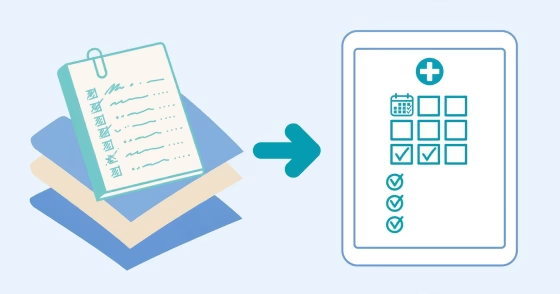

If your clinic books thirty appointments a day and five do not arrive, you lose a sixth of your operating capacity every day with no matching saving — rent and salaries do not move. This is the most expensive problem in a clinic and the cheapest to fix, because most of the fix is timing and messaging rather than complex software.
Reminder timing beats reminder volume
A message twenty-four hours before the appointment gives the patient enough time to cancel and gives you enough time to resell the slot. A message one hour before only nudges; it does nothing operationally because you cannot fill the gap it creates. Two messages work best: one at booking and one the day before, each explicitly asking for a cancellation reply.
- Include a one-tap link or number to cancel.
- State the doctor and exact time — vagueness increases no-shows.
- Never send more than two; the third reads as spam and gets ignored.
A waiting list turns cancellations into revenue
A cancellation is not a loss if someone can take the slot. Keep a list of patients who said "any time works", ordered by clinical priority. The moment a slot frees up, the first name gets the call. Clinics that run this convert about half their cancellations into actual visits.
Self-booking lowers no-shows because the patient chose the time
A slot a patient picked themselves on a booking page is honoured more often than one handed to them on a call. The reason is behavioural: choosing creates commitment. The side benefit is that reception stops fielding booking calls and becomes available to the patients already in the room.
Double booking is a sharp tool that needs a limit
Some clinics book two patients into one slot expecting a no-show. That works until both arrive, and then you lose the trust of both. If you use it, restrict it to the first slot of the day and to patients with a documented history of missing appointments. Never make it the default.
Booking with automatic confirmation is part of Mudiri Digi clinic solutions, and if you need it wired to WhatsApp or a payment gateway see the integrations and API service.