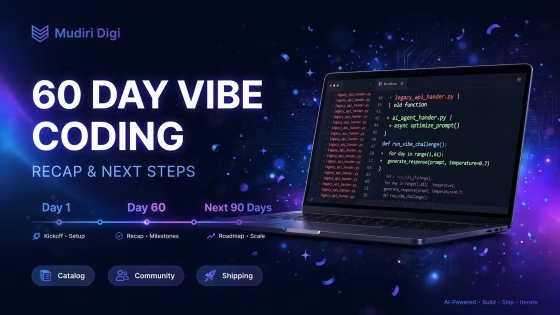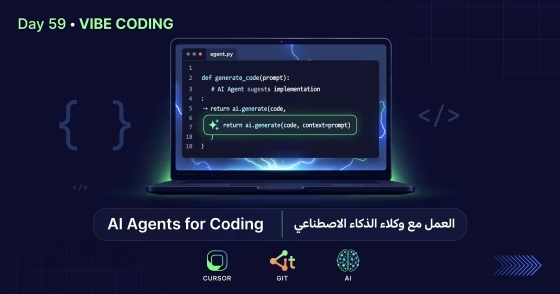

Welcome to Day 15 of the Vibe Coding series from Mudiri Digi. Database Schema with AI: Migrations Without Disasters — a practical guide for global developers building digital products with AI assistance.
ER modeling
An overview of ER modeling in the vibe coding context: how AI shortens dev time without sacrificing baseline quality.
- Define the goal before opening your editor
- Write a clear prompt with project context
- Review output line by line
Migration strategy
A practical take on Migration strategy: steps you can run today with Cursor or Claude on a real project.
- Split work into 25-minute steps
- Use diff view before merging
- Document the decision in README
Indexes
Common mistakes around Indexes — and how to avoid them on small or solo dev teams.
- Never trust AI for secrets or auth
- Run linter and tests after each session
- Keep a rollback copy
Seed data
Success metrics for Seed data: what to measure before and after applying this lesson.
- Measure delivery time vs quality
- Log what worked in a prompt library
- Share results with the team
Review checklist
Advanced steps for Review checklist when the project grows or new developers join.
- Plan a weekly refactor slot
- Automate CI/CD gradually
- Review architecture decisions
Daily execution checklist
- Read the article and pick 3 points that apply to your current project.
- Apply the database schema AI design lesson in a 45–90 minute vibe coding session.
- Review generated code: security, naming, and tests.
- Merge changes via a clear Git commit.
- Log what you learned — for the next day in the series.
Frequently asked questions
What is vibe coding and how is it different from traditional programming?Vibe coding blends developer intuition, AI tools, and a steady daily rhythm to ship features with acceptable quality. The focus is fast delivery with human review — not blind copy-paste of generated code.
Is Day 15 content suitable for beginners?Yes. Every Mudiri Digi article in this series is practical: clear concepts, an execution checklist, and cited sources. Start at Day 1 if you are new to vibe coding.
What tools do I need to get started?An editor like Cursor or VS Code, a GitHub account, and an AI model (Claude or Copilot). You do not need a complex stack — start with a small project and apply today's lesson.
Trusted sources
- Stack Overflow — community Q&A
- OWASP — web application security
- MDN Web Docs — HTML, CSS, and JavaScript reference
- web.dev — Core Web Vitals — web performance
- GitHub Docs — Git and GitHub
- OECD — digital economy trends
- U.S. Bureau of Labor Statistics — tech labor market data
Next step: Explore ready-made Mudiri Digi solutions in our catalog — SaaS systems, stores, and Android apps for startups.